“My highest recommendations for Devon and the Maritime Air team — thorough, honest, and on time. They explained everything in plain language and didn't push any unnecessary upsells.”
Spencer Fuller
May 2026
Five hidden numbers decide whether your air conditioner lasts 8 years or 15, whether your power bill is $180 or $340, and whether the humidity in your Treasure Coast home ever really lets go. This guide walks homeowners, property managers, and boat owners through each one — no jargon, no upsell, just the physics your system actually runs on.
Reviewed by Devon Schoby, Founder & Lead Technician, Maritime Air Co. · Maritime Air Co. · Class-A Licensed HVAC Contractor, Treasure Coast FL
Verified Google reviews
Class-A CAC1824400
Treasure Coast residents
Full-spectrum HVAC
Approved before work begins
Warranties registered for you
St. Lucie County member
HVAC science is the small set of physical measurements that determine whether your air conditioner cools comfortably, uses reasonable electricity, and lasts 15 years instead of 8. There are dozens of numbers a technician can measure, but five of them decide almost everything: static pressure (how hard your blower is working), superheat and subcooling (whether refrigerant charge is correct), Manual J load (whether the system is the right size for your home), and the actual refrigerant charge weight. Skip any one of them and you're guessing.
In Florida, an AC that's 15% out of spec still cools — just barely — while quietly running 30–50% higher electric bills, freezing coils, shortening compressor life, and creating humidity problems that lead to mold. On a boat, the same errors kill a compressor in a single season because there's no margin for waste heat. Understanding what should be measured protects your investment whether it's a $12,000 residential system or a $9,000 marine self-contained unit.
You don't need to know the physics to recognize the warning signs. Homes and boats with unmeasured or mis-measured systems consistently show the same symptoms.
Almost every case traces back to one of five root causes: static pressure too high because ducts are undersized or filters are too restrictive; refrigerant charge off by even a few ounces (measured by superheat/subcooling); the wrong equipment size because a Manual J load calculation was never done; airflow across the indoor coil below 350 CFM per ton; and — on the Treasure Coast specifically — salt-air corrosion of coils, contactors, and capacitors that changes readings faster than inland systems.
Every Maritime Air Co. service call runs the same measurement sequence, whether you called us for a $89 diagnostic or a full replacement quote. We measure total external static pressure at the air handler with a manometer, superheat and subcooling at the service ports, temperature split across the evaporator, amperage draw at the compressor and blower, and refrigerant line temperatures. We photograph the readings and leave them with you — no black-box diagnosis.
The right repair depends on which number is off. High static pressure is solved with duct correction, a lower-restriction filter cabinet, or a properly sized blower. Bad superheat/subcooling means a leak repair and precise recharge — not a top-off. Wrong-size equipment is a replacement conversation, and we'll show you the Manual J before quoting. Corroded components (coastal salt) are individually replaceable in most cases without touching the whole system.
Yes — three things. First, change or clean your filter monthly in Florida (salt and pollen load builds fast). Second, put your hand on the large copper line at the outdoor unit while the AC is running: it should feel cool and sweaty, never icy and never warm. Third, note the temperature at a supply vent vs. the return grille — a healthy split is 16–22°F. Anything outside that range is worth a phone call. Never open the electrical panel, add refrigerant, or hose the indoor coil.
Call us the moment a symptom appears — not after two weeks of hoping. In Florida heat and coastal humidity, a small issue (like a 10% refrigerant undercharge) becomes compressor damage within days. Our $89 in-home diagnostic includes all five core measurements and is applied in full to any repair we perform.
“My highest recommendations for Devon and the Maritime Air team — thorough, honest, and on time. They explained everything in plain language and didn't push any unnecessary upsells.”
“Devon has provided thorough maintenance and excellent service. Truly family-owned care — they treat your home like it's their own. Highly recommend for Treasure Coast homeowners.”
“Working with Devon on my HVAC system was a great experience from start to finish. Fair, clean install, and the system has been running perfectly through Florida summer heat.”
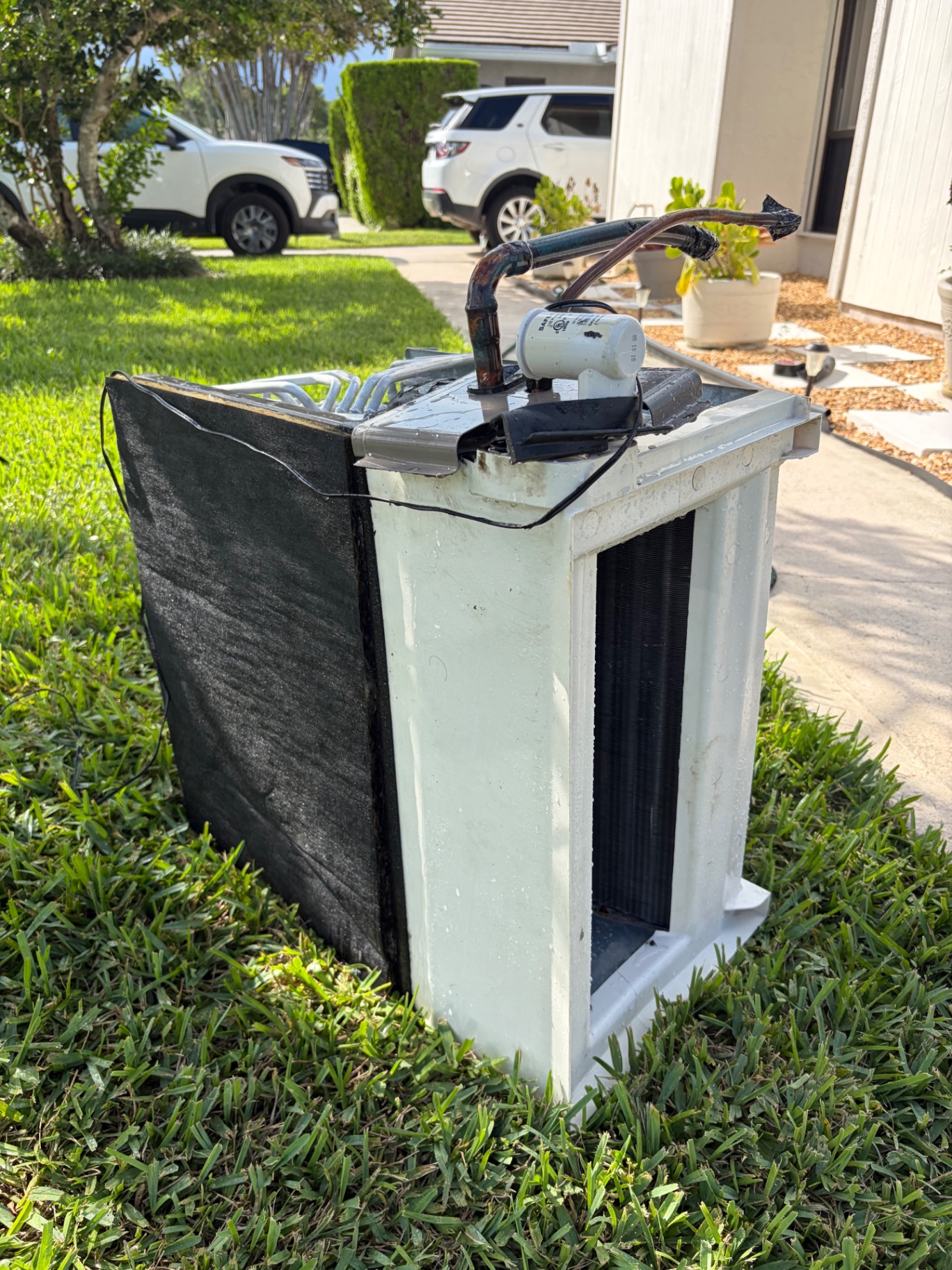
Real installs and repairs we've completed across the Treasure Coast.
Because the difference between a $185 capacitor and a $6,000 replacement is usually one measurement that was skipped years ago. Understanding the five core numbers — static pressure, superheat, subcooling, load (Manual J), and charge — lets you tell whether a technician is guessing or actually diagnosing.
The concepts are, but this guide is written for homeowners, property managers, and boat owners on the Treasure Coast — not for HVAC students. We translate every measurement into what you'd actually see, hear, or feel in your home or on your vessel.
Every Maritime Air Co. diagnostic includes measured static pressure at the air handler, superheat and subcooling at the outdoor unit, temperature split across the coil, and a visual load check against the system's Manual J design. That's the difference between 'it's low on freon' and an actual diagnosis.
Yes. Coastal corrosion accelerates coil leaks, capacitor failure, and contactor pitting, which throws every reading off. We factor salt exposure into every diagnosis from Sewall's Point to Hutchinson Island and Vero Beach.
Same-day diagnosis with measured static pressure, superheat, and subcooling on every call.
The annual measurement pass that keeps all five numbers in spec year after year.
Manual J, Manual D, Manual S — done before we quote, not after we install.
Humidity, filtration, and ventilation solutions that only work when airflow is measured first.
The same measurement discipline, adapted for self-contained and chilled-water marine systems.
The cluster hub covering how HVAC works, the refrigeration cycle, BTUs, and SEER.
Why 80% of underperforming Treasure Coast systems fail an airflow test, not a refrigerant test.
What's in your system, what it will cost to service, and when to plan replacement.
The five-part refrigeration loop, in plain English, with the Florida symptoms mapped to each stage.
The physics behind clammy houses at 74°F and how right-sizing fixes it.
Condenser rinse systems, dosing pumps, Salt-Away injection, filtration, and coastal maintenance schedules.
Call (772) 236-4277 or schedule online. Class-A licensed across the Treasure Coast.