Open Now
(772) 236-4277
24/7 Emergency Active
Hutchinson Island · Treasure Coast
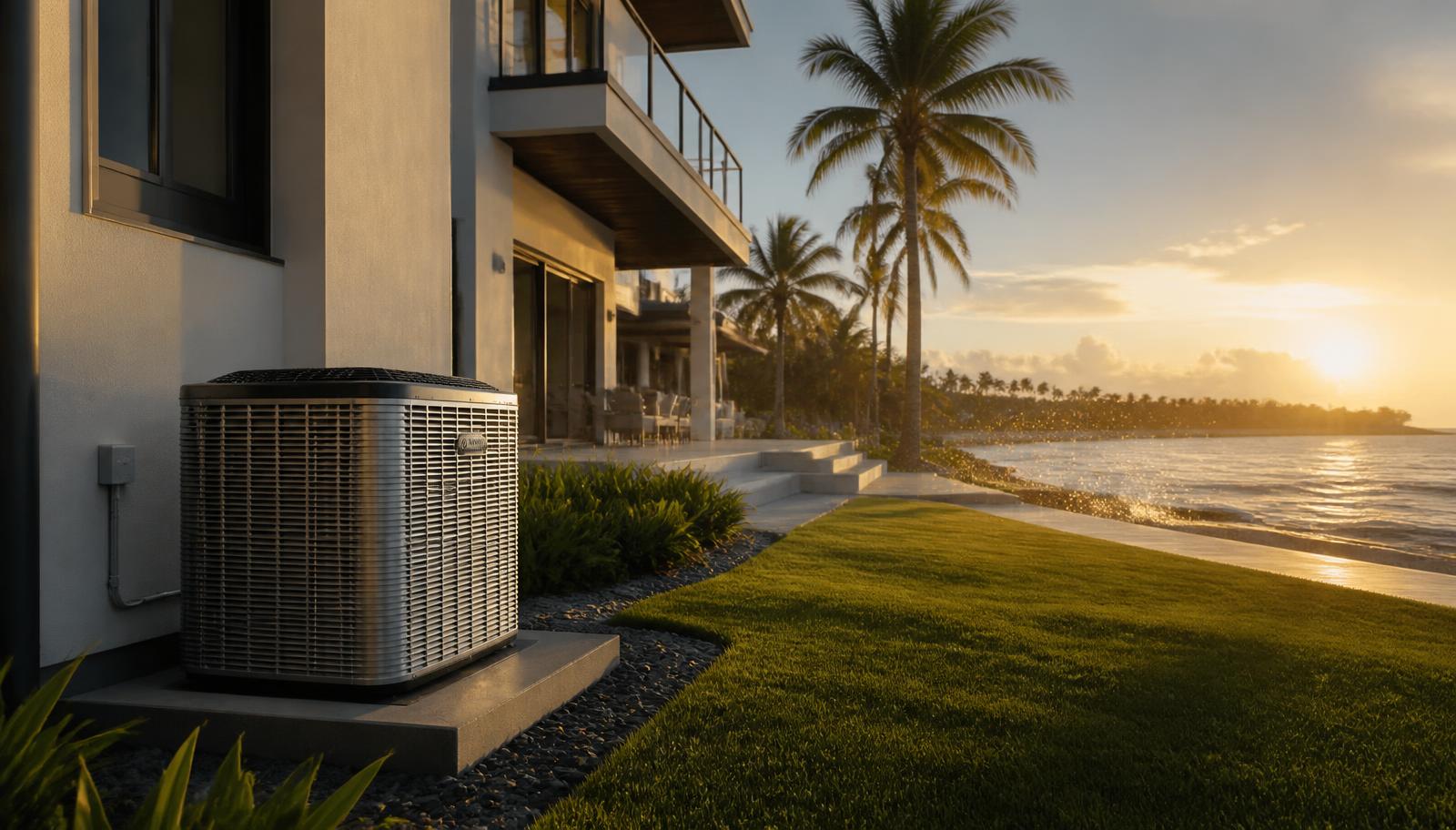
Outdoor air conditioning condenser at a luxury Florida waterfront home with ocean salt spray in the background
Prevention over repair

Florida's Coastal Corrosion Prevention Specialists

Salt air begins attacking HVAC equipment the day it is installed. Maritime Air Co. helps protect residential, commercial, and marine HVAC systems using corrosion prevention strategies built for Florida's coastal environment.

Most HVAC companies repair corrosion after it happens. We specialize in helping prevent it.

Class-A Licensed · CAC1824400Residential · Commercial · MarineTreasure Coast Based
Why Treasure Coast Trusts Us

Reasons Homeowners & Captains Pick Maritime Air Co.

  • 5-Star Rated

    Verified Google reviews

  • Licensed & Insured

    Class-A CAC1824400

  • Family Owned & Operated

    Treasure Coast residents

  • Residential · Commercial · Marine

    Full-spectrum HVAC

  • Written Estimates

    Approved before work begins

  • Photo-Documented Work

    Warranties registered for you

  • Chamber of Commerce

    St. Lucie County member

Why it matters

What Salt Air Actually Does to an Air Conditioner

Corrosion is not a single event. It is nine or ten small processes running at the same time, all of them quiet, none of them dramatic enough to notice until something stops working on the hottest afternoon of the year. Here is what is happening on your equipment right now.

Salt accelerates oxidation

Chloride ions break down the thin oxide layer that normally protects aluminum and steel. Once that film is compromised, metal that would corrode slowly inland starts oxidizing at a far faster rate — and it does not stop when the weather changes.

Salt pulls moisture out of the air

Salt is hygroscopic. Deposits on a condenser hold humidity against the metal long after the surface should have dried, so the equipment spends most of its life wet at a microscopic level. That is the single biggest reason coastal corrosion runs continuously rather than seasonally.

Electrical terminals corrode first

Contactor points, disconnect lugs, capacitor spades, and low-voltage connections build resistance as they corrode. Higher resistance means heat, and heat is what turns a corroded terminal into a burned contactor or a failed compressor start.

Condenser coils lose capacity

Aluminum fins pit, then bloom with white powder, then flake. Every bit of fin surface lost is heat-transfer surface lost. Head pressure climbs, run times stretch, efficiency drops, and the system works harder to deliver less.

Cabinets and hardware rust

Screws, panel edges, base pans, and mounting hardware go first because coatings are thinnest at the cut edges. A rusted base pan lets the compressor sag; seized fasteners turn routine service into a much longer job.

Fan motors fail early

Salt works into bearings and motor windings, and corroded fan blades fall out of balance. An out-of-balance blade puts side load on the bearing, and the motor that should have lasted twelve years gives up in five or six.

Control boards get damaged

Modern inverter and communicating systems carry electronics outdoors. Salt-laden condensation on a board creates leakage paths between traces, and the failures it produces are intermittent and expensive to chase.

Corrosion can lead to refrigerant leaks

Where dissimilar metals meet — copper tubing joined to aluminum fins, brazed joints, service valves — galvanic corrosion attacks the weaker metal. Formicary corrosion pinholes are a well-documented failure mode on coastal coils.

Oceanfront systems live shorter lives

Industry field experience on barrier islands and oceanfront properties consistently shows shorter equipment service life than comparable inland installations. We are not going to pretend a number applies to every home — but on this coast, exposure is the variable that decides how long your equipment lasts.

How salt attacks the metal

Clickable diagram

Where salt attacks an outdoor unit first

Select a numbered hotspot to read what happens at that location.

Outdoor condensing unit (cutaway)electrical12345

Choose a hotspot above to see how salt damage starts there.

How corrosion progresses over time

Interactive graphic

Corrosion progression on an unrinsed coastal condenser

Drag the timeline to see what salt exposure does to an outdoor coil within a mile of the Atlantic.

0mo6mo18mo36mo60mo

New coil

Bright aluminum fins, clean copper tube joints, intact cabinet paint. Full rated airflow across the coil face.

  • Design head pressure
  • Rated capacity
  • No visible oxide
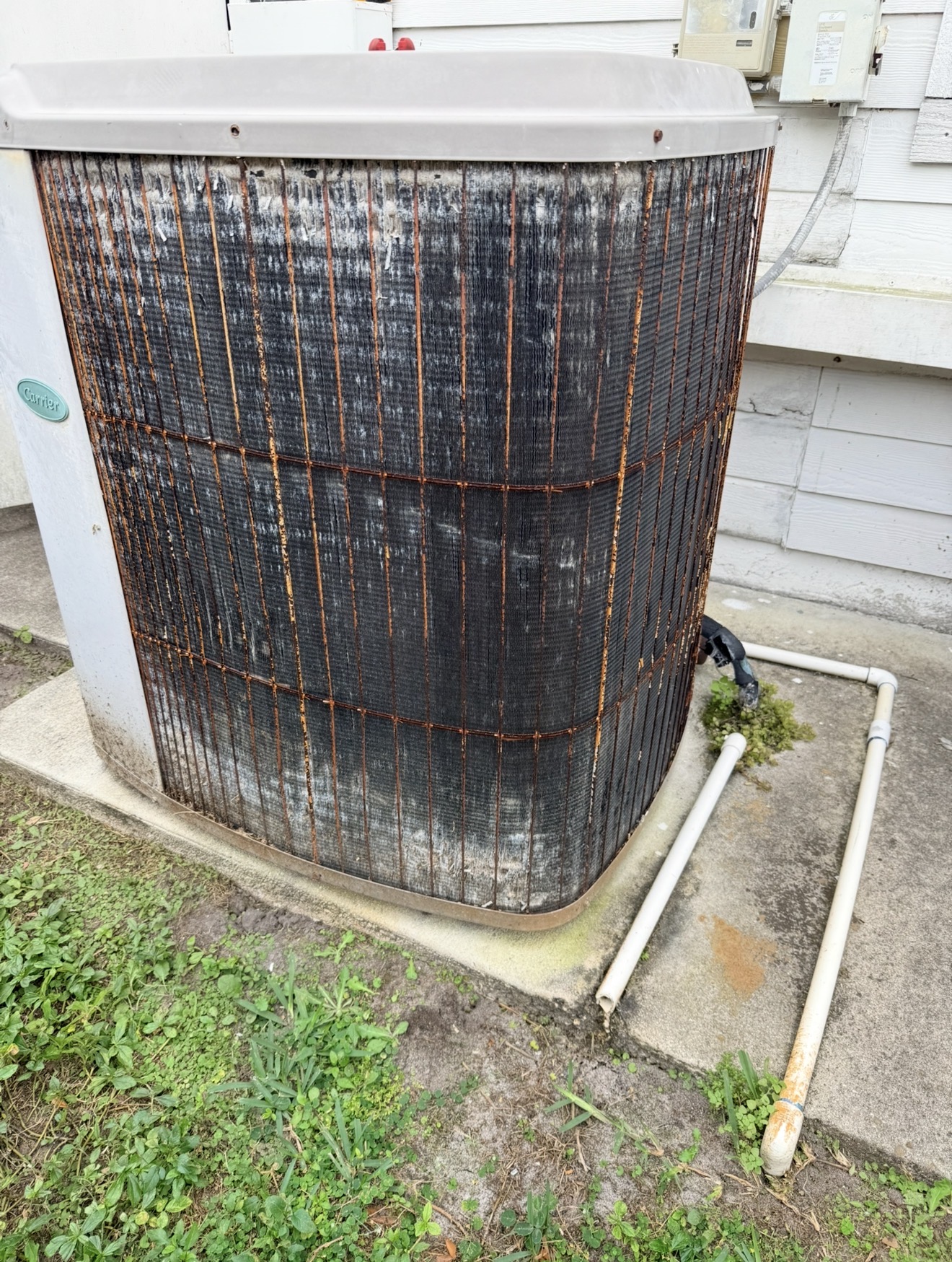
Heavily salt-loaded and fouled condenser coil from a Port St. Lucie air conditioner
Real Port St. Lucie condenser coil. Salt and debris loading like this measurably reduces heat transfer long before anything actually fails.
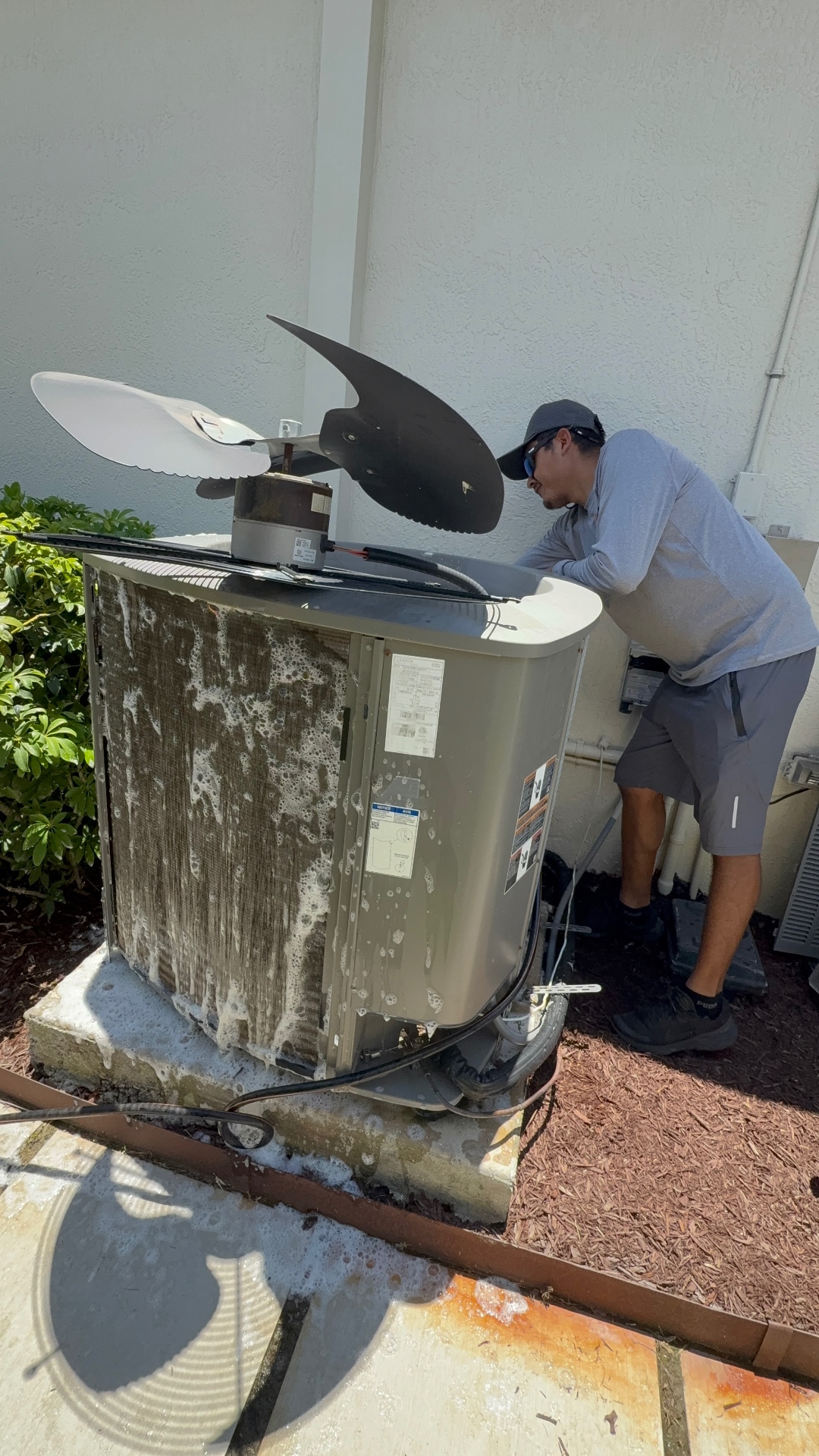
Maritime Air Co. technician performing a professional coil cleaning on a coastal Lennox system in Port St. Lucie
Coil cleaning done properly — coil-safe chemistry, full rinse-through, and photo documentation so condition can be tracked from visit to visit.
Our signature program

The Maritime Coastal Protection System™

Six components, applied selectively. Not every property needs all six — a home five miles inland does not need what an oceanfront condo on Hutchinson Island needs. The assessment decides, and we will tell you plainly when something is not worth doing.

01

Coastal Corrosion Assessment

Everything starts here. A technician documents the actual condition of your equipment and its exposure so protection decisions are based on evidence rather than a sales script. You get photos, readings, and a written summary — including the components that are still in good shape.

The assessment is also how we set a baseline. Corrosion is a rate problem, and you cannot judge a rate from one visit. Documented condition today makes next year's visit meaningful.

  • Distance from the ocean, inlet, or Indian River Lagoon
  • Prevailing wind exposure and how sheltered the equipment sits
  • Existing corrosion on coil, cabinet, hardware, and line set
  • Equipment age, model, and coastal rating of the original install
  • Water quality if a rinse system is present or planned
  • Coil condition, fin integrity, and measured heat transfer
  • Electrical components: contactors, lugs, capacitors, disconnects
  • Cabinet, base pan, fastener, and mounting condition
  • Drainage, pad condition, and standing-water exposure
  • Overall system health: pressures, temperatures, amp draw
02

Coastal Protective Coil Coatings

Commercial-grade protective coatings put a barrier between salt-laden moisture and the aluminum and copper underneath. They can be specified from the factory on coastal-rated equipment or applied in the field to a coil that is still structurally sound.

Coatings help reduce the rate of salt corrosion and support longer equipment life in harsh coastal environments. They are not a guarantee, they carry a small efficiency trade-off, and they cannot restore fins that have already deteriorated. On a coil that is past saving, we will say so rather than coat over the problem.

Related reading: coastal corrosion knowledge center.

Salt-fouled, corroded condenser coil pulled from a coastal Port St. Lucie air conditioner
Example of coastal exposure: fin condition is the clearest early indicator. Coating decisions are made from what the fin pack actually looks like, not from the age of the unit.
03

Automated Condenser Rinse Systems

A professionally installed rinse system plumbs fresh water to a spray assembly at your outdoor unit and washes salt deposits off the coil on a scheduled basis — daily, weekly, or whatever the exposure calls for. It solves the frequency problem that hand rinsing never quite does, and it keeps working while you are away.

We size the nozzles to the coil, set the timer to the exposure, protect the electrical components from spray, verify drainage, and confirm the water supply is appropriate. Poorly designed rinse systems can do more harm than good; the details here are the whole job.

More detail: how condenser rinse systems work.

Interactive diagram

How an automatic condenser rinse system is plumbed

Tap any component to see what it does and how it is sized on a Treasure Coast installation.

House water

The system taps the home's potable cold-water line — usually at a hose bibb or a dedicated 1/2 in. branch near the condenser pad. A backflow preventer or vacuum breaker keeps rinse water (and any injected treatment) from ever migrating back into the drinking water system.

Typical requirement: 40–60 psi static, 2–5 GPM available

04

Salt Neutralization Systems

Where conditions justify it, we install injection systems that introduce approved salt-neutralizing solutions into the condenser rinse water. A metering pump doses the solution at a controlled concentration during the rinse cycle so the coil is treated rather than simply wetted.

These systems help reduce salt buildup and support long-term equipment protection when combined with regular professional maintenance. They do not stop corrosion, and we will not present them that way. They are one layer in a program — and on the wrong property, they are an expense without a return.

More detail: salt-neutralizing injection and dosing pump design.

Interactive diagram

How a chemical dosing pump injects into a rinse line

Tap a stage to see what happens to the treatment concentrate on its way to the coil.

Chemical tank

A sealed, vented polyethylene reservoir holds the concentrate — typically 5 to 15 gallons for a residential coastal installation. A foot valve with a strainer sits at the bottom; a low-level float can signal the controller before the tank runs dry and the system silently reverts to plain water.

Refill interval depends on dose rate — commonly 3–12 months

05

Preventative Corrosion Maintenance

Hardware and coatings only pay off with a maintenance cadence behind them. Our coastal maintenance visits are built around corrosion specifically — not a generic checklist with a filter change stapled to it.

Every visit is photographed. That is how you see whether the fin pack is holding, whether a contactor is starting to pit, and whether the protection you paid for is doing its job.

See maintenance plans
  • Coil cleaning with coil-safe cleaners, not caustic shortcuts
  • Electrical inspection of every terminal, lug, and connection
  • Dedicated corrosion inspection with severity noted per component
  • Drain line and pan cleaning
  • Full condenser wash-down with fresh water
  • Hardware and fastener inspection, replacement where needed
  • Performance testing — pressures, superheat, subcool, amp draw
  • Photo documentation so you can see change over time
  • Salt buildup monitoring between visits
06

Marine Grade Hardware Recommendations

On coastal installations we may recommend corrosion-resistant fasteners, stainless hardware, upgraded disconnects and whips, sealed electrical connections, coated or coastal-rated equipment, and mounting details that keep metal out of standing water and salt spray.

Most of these upgrades cost very little at install time and are expensive to retrofit later. Our marine division has been doing this on vessels for years — the same thinking applies to a condenser sitting a hundred yards from the Atlantic.

Marine HVAC services
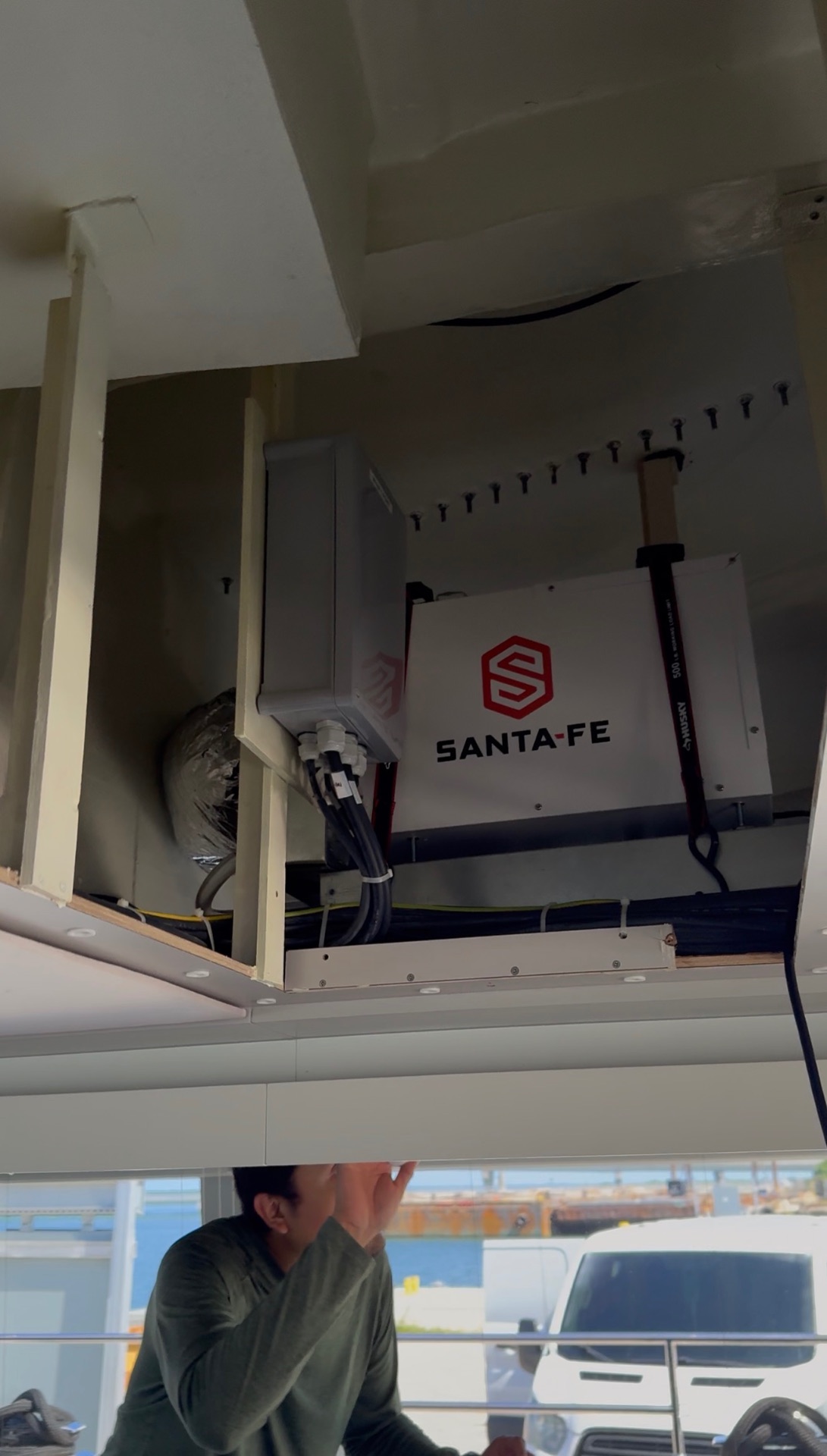
Maritime Air Co. marine HVAC installation aboard a yacht in Fort Pierce, Florida
Marine work in Fort Pierce. Corrosion-resistant hardware and sealed connections are standard practice on the water — and increasingly justified on land near it.
Who we help

Properties That Live in Salt Air

Corrosion prevention scales from a single beach house condenser to a portfolio of rooftop units across a hotel or an HOA community. We work with owners, managers, and facilities teams across the Treasure Coast.

Luxury waterfront homes
Beach houses
Oceanfront condominiums
Marinas
Yacht clubs
Restaurants
Hotels
Commercial buildings
Property managers
HOAs
Vacation rental properties
Marine facilities
Honest comparison

Why Maritime Air Co.

There are good contractors on this coast. The difference is focus: corrosion prevention is a service line here, with the equipment, training, and documentation behind it — not something we mention after your condenser has already rusted through.

Maritime Air Co.

  • Coastal corrosion specialists
  • Residential HVAC experts
  • Commercial HVAC experts
  • Marine HVAC specialists
  • Corrosion prevention programs
  • Automated condenser rinse systems
  • Protective coil coatings
  • Salt neutralization systems
  • Honest repair-first philosophy
  • No commission-based technicians

Typical HVAC company

  • Repairs corrosion after it has already done the damage
  • Little to no coastal specialization
  • Sales-focused visits with a replacement quote up front
  • Limited preventative services beyond a filter change
  • Minimal working knowledge of salt-air failure modes
Free self-assessment

Corrosion Risk Calculator

Five questions, no email required. This gives you a general risk picture — it is not a substitute for a technician putting eyes and instruments on your equipment.

1. How far is your property from the ocean or inlet?
2. How old is your HVAC equipment?
3. Do you already see rust or corrosion?
4. Have the condenser coils ever been coated?
5. Does the outdoor equipment get regular fresh-water rinsing?

Answer all five questions to see your risk level.

Treasure Coast coverage

Corrosion Risk Is Different in Every Town on This Coast

Port St. Lucie

PSL runs from inland subdivisions to canal-front homes that connect to the river. Corrosion risk varies block to block here, which is exactly why we assess before recommending anything. Equipment on the eastern edge of the city sees measurably more salt than the same model installed off Becker Road.

Port St. Lucie HVAC service

Tradition

Tradition sits far enough inland that salt aerosol is light, but newer high-efficiency equipment there carries outdoor electronics worth protecting. Coating decisions are usually unnecessary; corrosion inspection at maintenance still is.

Tradition HVAC service

Fort Pierce

Our shop is downtown on N 2nd Street. Along Indian River Drive and out toward the inlet, condensers pick up salt from both the lagoon and the ocean. We see the full range of coastal failure here — pitted fins, burned contactors, and base pans that rusted through years before the compressor ever complained.

Fort Pierce HVAC service

Hutchinson Island

The hardest corrosion environment we work in. Oceanfront and near-oceanfront equipment on the island earns every layer of protection available: coated coils, an automated rinse schedule, corrosion inspection on all electrical components, and marine-grade hardware where it matters.

Hutchinson Island HVAC service

Jensen Beach

Salt arrives from the ocean and the river, and there is often less breeze to dry equipment between exposures. Air handlers in unconditioned garages add condensation on top of the salt load — a combination that rusts cabinets from the inside out.

Jensen Beach HVAC service

Stuart

Downtown Stuart, Sewall's Point, and the Manatee Pocket area give us heavy crossover between home and vessel. Plenty of our Stuart clients want the same corrosion discipline applied to the house and to the boat at the slip.

Stuart HVAC service

Palm City

Mostly moderate exposure, with river-front properties along the South Fork seeing more. Larger homes here often run two or three systems, so a documented corrosion program keeps replacement timing from stacking up in a single year.

Palm City HVAC service

Vero Beach

The barrier island — Riomar, John's Island, Orchid — is prime coating and rinse-system territory, with high-end equipment that deserves quarterly attention. Mainland Vero is a different risk profile entirely, and we treat it that way.

Vero Beach HVAC service
Full coverage map: Treasure Coast service area.
Reviews

What Coastal Clients Say

Homeowners, property managers, and boat owners across the Treasure Coast.

5.0
37 Google Reviews

My highest recommendations for Devon and the Maritime Air team — thorough, honest, and on time. They explained everything in plain language and didn't push any unnecessary upsells.

Spencer Fuller
May 2026
Google

Devon has provided thorough maintenance and excellent service. Truly family-owned care — they treat your home like it's their own. Highly recommend for Treasure Coast homeowners.

Oh Canada
March 2026
Google

Working with Devon on my HVAC system was a great experience from start to finish. Fair, clean install, and the system has been running perfectly through Florida summer heat.

David Alker
February 2026
Google
Who you are hiring

Licensed, Documented, and Not Paid on Commission

  • Licensed Florida HVAC contractor (CAC1824400)
  • Residential HVAC division
  • Commercial HVAC division
  • Marine HVAC specialists
  • 5-star rated across the Treasure Coast
  • Background-checked technicians
  • Drug-tested employees
  • Professional uniformed staff
  • No commission sales
  • Education-first company
Book it

Schedule a Coastal Corrosion Assessment

Tell us about your property and what you are seeing on the equipment. Photos help — if you can snap the outdoor unit and the coil, upload them with the form and we will come prepared.

Your Contact Info

Service Address

Tell Us About Your Coastal Exposure

What are you seeing? (select all that apply)

Anything Else?

Add Photos (optional)

A photo of the indoor unit, outdoor unit, thermostat, or the issue helps our techs prep before arrival. Up to 6 photos, 10 MB each.

Prefer to call? (772) 236-4277

Questions

Coastal Corrosion FAQ

How does salt air damage HVAC systems?

Airborne salt settles on outdoor equipment and attracts moisture, keeping metal surfaces damp. Chloride breaks down the protective oxide layer on aluminum and steel, which lets oxidation continue underneath. The result is pitted condenser fins, corroded electrical terminals, rusted cabinets and fasteners, failing fan motors, and in some cases refrigerant leaks where copper and aluminum meet.

How close to the ocean do I need to be before corrosion is a concern?

Salt aerosol is heaviest within the first mile of the coast and drops off with distance, but wind direction, elevation, and how sheltered the unit sits matter as much as the number on a map. We have seen heavy corrosion two miles inland on an unsheltered rooftop and light corrosion a few hundred yards from the water behind a dune line. That is why we assess the actual equipment instead of quoting by zip code.

How often should coastal HVAC systems be serviced?

Within about a mile of the water, twice-yearly full service is the minimum and quarterly rinsing is appropriate for oceanfront equipment. Inland Treasure Coast homes generally do fine on a standard twice-a-year maintenance schedule with corrosion noted at each visit.

What is a condenser rinse system?

It is a professionally installed fresh-water rinse assembly plumbed to your outdoor unit that sprays the coil on a scheduled basis to wash salt deposits off before they can concentrate. It handles the frequency that hand rinsing rarely keeps up with, especially at second homes where nobody is there for months at a time.

Does fresh water remove all the salt?

No. Fresh-water rinsing removes the bulk of surface salt, which is the majority of the problem, but it does not reach every crevice or dissolve deposits that have already bonded into pitted metal. Rinsing reduces salt loading — it does not make equipment immune to corrosion.

What is a coastal coil coating?

A commercial-grade protective coating applied to the coil and fin pack that creates a barrier between salt-laden moisture and the metal underneath. Coatings can be factory-applied on coastal-rated equipment or field-applied to existing coils. They help reduce corrosion rate and support longer equipment life; they carry a small efficiency trade-off and are not permanent.

Can corrosion be stopped once it has started?

It cannot be reversed. Metal that has already pitted or flaked is gone. What can be done is slowing the rate — cleaning the salt off, treating and protecting sound surfaces, replacing corroded electrical components before they fail, and putting a rinse and maintenance schedule in place. Honest answer: on badly deteriorated equipment, protection spending is often better applied to the replacement system.

How can I extend the life of my oceanfront air conditioner?

Rinse it with fresh water regularly, keep the coil professionally cleaned, have electrical terminals inspected and treated, consider a protective coil coating, use marine-grade hardware on coastal replacements, and document condition at every visit so decline is measured rather than guessed at.

Should beachfront homes have additional HVAC protection?

In our experience, yes. Beachfront equipment faces continuous salt exposure that inland equipment never sees, and the cost difference between a protected install and an unprotected one is small next to the cost of replacing a condenser years early.

Why do oceanfront HVAC systems fail sooner?

Several failure paths run at once: coil corrosion reduces heat transfer so the system works harder, electrical corrosion causes resistance and heat at connections, fan motors and bearings degrade, and refrigerant leaks develop at corroded joints. Any one of those can end a system. Together, they compress the timeline.

Are salt neutralization systems safe for my equipment?

When properly specified and installed, approved salt-neutralizing solutions are introduced through the rinse system at controlled concentrations for use on HVAC coils. We only install them where the exposure justifies it and where the equipment and water supply are appropriate, and we do not present them as a guarantee against corrosion.

What does a Coastal Corrosion Assessment cost and what do I get?

Call us for current pricing. You get a documented inspection of coil, cabinet, hardware, electrical components and drainage, photos of what we find, performance readings, and a written explanation of which protective measures are worth doing on your equipment — including when the answer is to do nothing yet.
Protect the Equipment Before the Salt Wins

Corrosion cannot be undone, but its rate can be changed. Start with an assessment, find out where your equipment actually stands, and decide from there.

Call (772) 236-4277Text Us