“My highest recommendations for Devon and the Maritime Air team — thorough, honest, and on time. They explained everything in plain language and didn't push any unnecessary upsells.”
Spencer Fuller
May 2026
Maritime Air Co. is Hutchinson Island's oceanfront condo HVAC specialist — the team to call for rooftop condenser installs, water-cooled in-closet systems, compressor sound dampening, Trane Spine Fin replacements, and multi-coat coastal coil coating that actually slows salt-air oxidation. From Fort Pierce Inlet to the Stuart causeway, we serve every high-rise, mid-rise, villa community, and beach house on the barrier island. Class-A licensed, fully insured, 5.0 stars on Google.
Verified Google reviews
Class-A CAC1824400
Treasure Coast residents
Full-spectrum HVAC
Approved before work begins
Warranties registered for you
St. Lucie County member
Same-day diagnostics for failed compressors, refrigerant leaks, frozen coils, and thermostat issues.
Right-sized, energy-efficient systems engineered for Florida humidity and salt-air corrosion.
Remove dust, pollen, pet dander and mold for healthier indoor air across coastal homes.
Captain's Comfort Club — twice-a-year tune-ups, priority dispatch, and warranty-keeping service.
Hutchinson Island sits in USDA zone 10a with a humid subtropical climate. Summer dewpoints regularly exceed 75°F from June through September, our AC systems run 12–16 hours per day, and August indoor latent loads can double a home's design moisture removal requirement. Homes within 3 miles of the Atlantic or Indian River Lagoon also face chloride-laden salt air that destroys uncoated aluminum condenser coils in 5–8 years. Equipment selection, coil coatings, and dehumidification strategy in Hutchinson Island are not the same as inland Florida — and they shouldn't be priced or installed the same way either.
After thousands of service calls across the Treasure Coast, these are the failures we diagnose week after week in Hutchinson Island homes. If any of them sound familiar, call us before they turn into a compressor or coil replacement.
Florida humidity overworks under-maintained systems — a common Hutchinson Island call. We diagnose airflow restrictions, dirty filters, and low-charge issues that cause icing.
Summer storms and FPL surges destroy compressors across Hutchinson Island. We install whole-system surge protectors and source warranty-replacement Trane, Carrier, and Goodman scroll compressors fast.
Salt air corrodes aluminum coil fins on homes east of US-1. We pressure-test with nitrogen, electronically leak-detect, and re-braze or replace coils with coastal-grade Heresite-coated alternatives.
Oversized or single-stage systems short-cycle and never pull moisture out. We right-size with Manual J, install variable-speed equipment, and add dedicated dehumidification when needed.
Standing condensation, dirty blower wheels, and biofilm in the drain pan all show up as black streaks on ceilings. We sanitize coils, replace drain pans, and add UV-C lights.
A failing capacitor, dirty condenser coil, or partial duct collapse can quietly add $80–$150/month. Our $89 tune-up catches all three before they snowball.
Most Hutchinson Island condos run one of two designs: a rooftop air-cooled condenser feeding a closet air handler, or a building-wide rooftop cooling tower looping condenser water down to a water-cooled unit hidden in each owner's closet. We service, repair, and replace both — and we coordinate with HOAs, property managers, and rooftop crane crews to do it cleanly.
Water-cooled condo systems put the compressor inside your home — usually steps from a bedroom or living room. We dampen the racket with compressor sound blankets, isolation pads, spring line-set isolators, mass-loaded vinyl on closet walls, acoustic doors with sweep seals, and (when it's time to replace) Trane variable-speed equipment that runs nearly silent at part load.
Salt air pits aluminum fins and corrodes copper coil joints within a few summers. We apply a marine-grade multi-coat coastal coating — Blygold PoluAl XT or Heresite — over the entire condenser coil to slow the oxidation process that kills beachfront systems prematurely. It's standard on every Hutchinson Island install we do.
Trane is the go-to system on the beach for one reason: their patented all-aluminum Spine Fin condenser coil eliminates the dissimilar-metal joints that galvanic-corrode in salt air. Paired with our coastal coating program and a powder-coated cabinet, a Trane install on Hutchinson Island routinely outlasts cheaper coastal-grade equipment by a decade.
Replacing a rooftop condenser on a 14-story oceanfront tower isn't a pickup-truck job. We schedule crane lifts, secure HOA approvals, protect roof membranes, and run refrigerant lines clean through existing chases — no surprise drywall demo.
We service the rooftop cooling tower (fill, sump, drift eliminators, fan motor), the condenser-water loop (pump, strainers, balancing), and the in-unit water-cooled condensers — plus coordinate water treatment and Legionella-safe blowdown with building management.
Direct beachfront homes face the harshest HVAC environment on the Treasure Coast. We design systems specifically for salt exposure, high humidity, and storm resilience — and stand behind every install with coastal-grade warranties.
We're the trusted HVAC partner for Airbnb, VRBO, and seasonal rental owners. Quick turnover inspections, remote monitoring, humidity control to prevent mold, and 24/7 emergency response keep your rental income — and 5-star reviews — protected.
Coastal homes need wind-rated condenser pads, surge-protected disconnects, and proper tie-downs. We bring every install up to current Florida coastal code and document for insurance discounts.
Serving Hutchinson Island Marriott Marina, Sailfish Point Marina, Indian River Plantation Marina, Nettles Island Marina, Harbour Isle Marina and every private dock in Hutchinson Island. Class-A licensed and EPA 608 certified — we diagnose, repair, and replace every major marine HVAC brand with the saltwater corrosion expertise your vessel demands.
Full-spectrum dockside marine HVAC service & emergency response.
View serviceSelf-contained, split-gas, and chilled-water Cruisair systems.
View serviceDometic Turbo, Emerald, SMX controls, and chiller diagnostics.
View serviceChilled-water yacht HVAC, fan-coil units, zone controls.
View serviceClosed-loop seawater coil descaling to restore cooling capacity.
View serviceMarch, Cruisair & Headhunter raw-water pumps swapped dockside.
View serviceFlorida Class-A Certified Air Conditioning Contractor with no job-size limitations — residential, commercial, and marine.
Local Port St. Lucie shop. You speak to the owner, not a national call center.
Hundreds of neighbors trust us. Read every review before you book — we publish them all, good and bad.
Standard on qualifying new installs. We register every system the day it's commissioned.
Cruisair, Dometic, Webasto chillers and air handlers. Dockside service across every Treasure Coast marina.
You approve the price before we turn a wrench. No surprise add-ons, no commission-driven tech upsells.
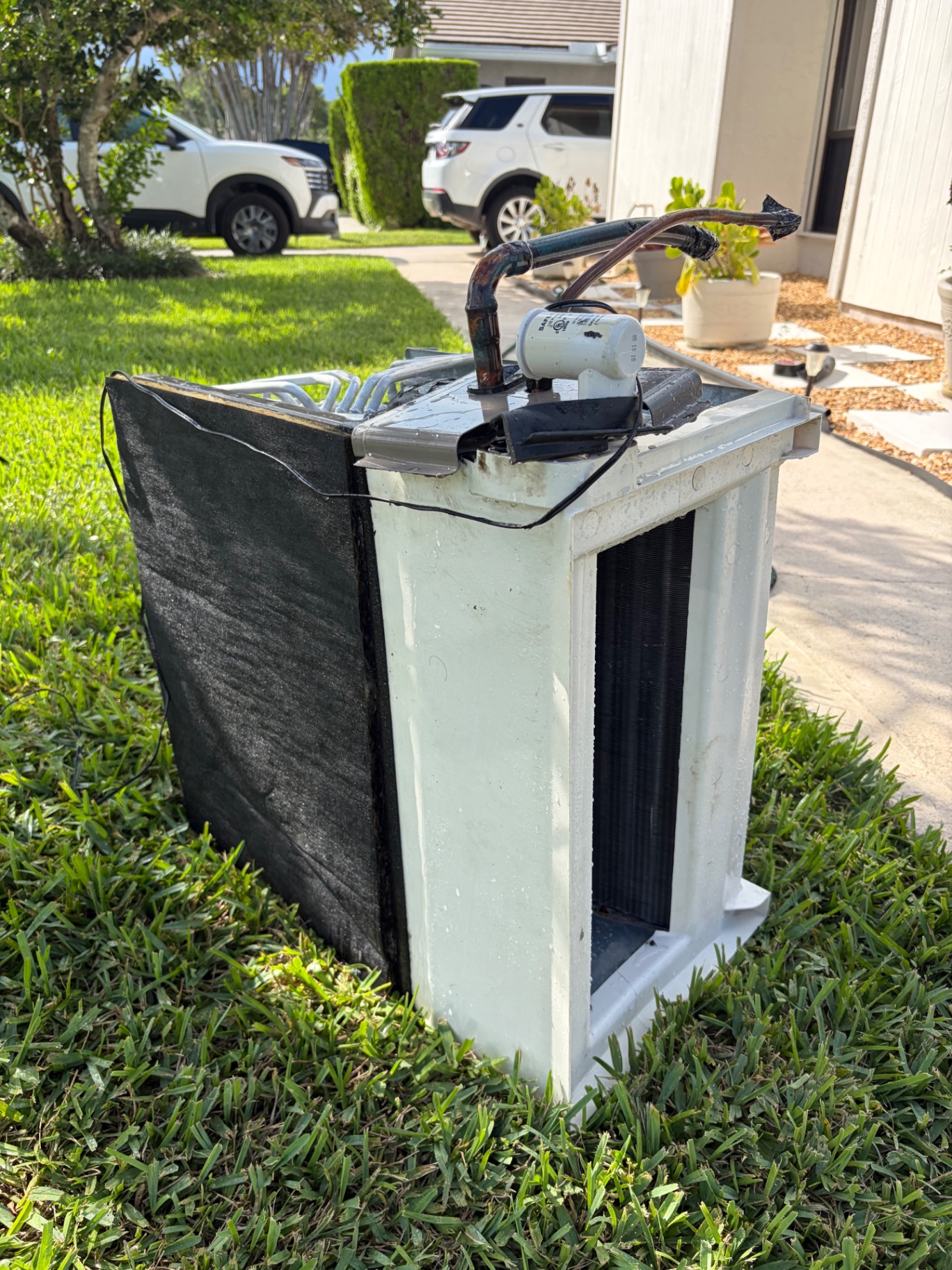
A sample of installs and repairs we've completed near Hutchinson Island.
Real Google reviews from Treasure Coast homeowners, business owners, and captains.
“My highest recommendations for Devon and the Maritime Air team — thorough, honest, and on time. They explained everything in plain language and didn't push any unnecessary upsells.”
“Devon has provided thorough maintenance and excellent service. Truly family-owned care — they treat your home like it's their own. Highly recommend for Treasure Coast homeowners.”
“Working with Devon on my HVAC system was a great experience from start to finish. Fair, clean install, and the system has been running perfectly through Florida summer heat.”
Most oceanfront condos on Hutchinson Island use one of two designs. Older mid-rise and high-rise buildings (Atlantis, Ocean Village, Sand Dollar Villas, The Empress, Island Dunes) typically run water-cooled split systems — a building-wide cooling tower on the roof loops condenser water down to a small water-cooled condensing unit hidden in each unit's air-handler closet, with the evaporator coil and blower right above it. Newer or low-rise buildings (Sailfish Point, Indian River Plantation villas, Ocean Harbour townhomes) usually use individual air-cooled split systems with the condenser mounted on the roof or a side balcony pad, refrigerant lines dropped through the chase to the closet air handler.
Water-cooled condensing units sit inside the unit — usually in a hall, laundry, or bedroom closet — so the compressor noise that normally lives outside is now ten feet from your couch or bed. Combine that with hard-tile floors, a hollow-core closet door, undampened refrigerant lines vibrating against framing, and an aging scroll or reciprocating compressor, and the building shakes when it cycles on. We solve this with compressor sound blankets, rubber isolation pucks under the unit, spring isolators on the line set, mass-loaded vinyl on the closet walls, a solid-core or acoustic closet door with sweep seals, and — when warranted — a Trane variable-speed compressor swap that runs whisper-quiet at part load.
Without coastal-grade coatings and salt-air protection, rooftop condensers on barrier-island condos fail in 3–7 years — half the mainland average. Water-cooled units inside the closet last longer mechanically (no direct salt exposure) but the cooling tower and copper loop suffer scale, biofilm, and chloride pitting that crater efficiency. Our multi-coat coastal program and tower water-treatment service routinely double or triple equipment life.
Yes — Trane is our go-to for Hutchinson Island oceanfront. Their patented Spine Fin all-aluminum condenser coil eliminates the dissimilar copper/aluminum joints that galvanic-corrode in salt air, the cabinets are powder-coated steel, and their variable-speed XV20i/XV18 compressors dramatically cut closet noise in water-cooled retrofits. Combined with our Blygold or Heresite multi-coat coastal coating, a Trane on the beach can outlast cheaper brands by a full decade.
It's a marine-grade, factory-style coil coating (Blygold PoluAl XT or Heresite VR-500/P-413) applied in multiple flood-and-bake coats over the entire condenser coil and fin pack. It seals the aluminum fins and copper tube joints from chloride attack, blocks galvanic corrosion, and preserves heat transfer — slowing the oxidation process that kills uncoated coastal systems in five years. We apply it on every new Hutchinson Island install and offer aftermarket coating service on existing equipment.
Yes. We service the rooftop cooling tower itself (fill media, sump, makeup valve, fan motor, drift eliminators), the condenser water loop (pump, strainer, balancing valves), and the in-unit water-cooled condenser. We also coordinate with HOAs on water treatment, blowdown rates, and Legionella prevention so the loop runs clean and the in-unit equipment doesn't scale up.
Yes — beachfront properties are our specialty. We service single-family beach houses, short-term vacation rentals (Airbnb/VRBO), and oceanfront condos from Fort Pierce Inlet to Stuart, including Sailfish Point, Ocean Village, Atlantis Condominium, and Indian River Plantation.
Absolutely. We pull St. Lucie and Martin County permits, submit HOA architectural packages, protect elevators and common areas with floor runners and corner guards, schedule installs around association quiet hours, and coordinate rooftop crane lifts with the building's property manager when a rooftop condenser needs to come down.
Yes — we are the go-to HVAC partner for absentee owners and rental managers on Hutchinson Island. Our remote-monitored maintenance plans include twice-yearly tune-ups, drain treatments, humidity checks, turnover inspections between guests, and emergency response so rentals stay 5-star and owners don't return to mold or water damage.
Walk through any oceanfront tower from Fort Pierce Inlet down to the Stuart causeway and you'll find one of two HVAC designs cooling the units. Knowing which one you have completely changes how the system is serviced, how it fails, how loud it is, and how long it lasts. Most owners — and frankly most repair companies that don't specialize on the barrier island — don't recognize the difference until something breaks.
Each unit has its own dedicated condenser sitting on the building roof (or, in some low-rise villa communities, on a side balcony pad). Refrigerant lines drop through a vertical chase to an air handler in a closet inside the condo, where the evaporator coil and blower live. It looks and works like a normal Florida split system — except the outdoor unit is 80 feet up, fully exposed to salt spray, and replacing it requires a crane.
Common in: Sailfish Point villas, Indian River Plantation, Ocean Harbour, Sand Dollar Villas, newer-construction townhomes and remodeled mid-rises.
A single building-wide cooling tower sits on the roof and pumps condenser water down a riser loop through every floor. In your unit, a small water-cooled condensing unit hides inside a hall, laundry, or bedroom closet — with the evaporator coil and blower stacked right above it. The compressor lives inside your home, not outside. The tower handles all the heat rejection on the roof.
Common in: Atlantis Condominium, Ocean Village, The Empress, Island Dunes, Sea Winds, Surfside, and most original-construction high-rises on the island.
We hear this every week from Hutchinson Island condo owners — especially in Atlantis, Ocean Village, The Empress, and the other older high-rises with water-cooled systems. The compressor was never supposed to live inside your home, but on a water-cooled split it does. When it cycles on, the sound carries through the closet door, vibrates through the wall framing, and rattles refrigerant lines against the studs. On a quiet evening it can shake a glass on the nightstand.
The good news: it's almost always fixable, and we don't have to replace the whole system to fix it. Here's the layered approach we use on Hutchinson Island condos.
A purpose-built acoustic wrap that fits snugly around the compressor shell. Cuts the dominant 60–250 Hz hum that closet drywall doesn't block. Single biggest noise reduction for the lowest cost.
Heavy-duty rubber pucks or neoprene rails under the condensing unit so compressor vibration isn't telegraphing directly into the slab and through the building structure.
The copper suction and liquid lines vibrate at compressor frequency and rattle against any wood or metal they touch. Spring hangers and rubber sleeves break that contact.
A thin, dense acoustic barrier added inside the closet drywall (or behind a new wall layer) that knocks the transmitted sound down measurably — usually 6–10 dB.
Hollow-core doors leak sound like a window. We swap them for solid-core or rated acoustic doors and add perimeter gaskets plus a door sweep so the closet actually contains the noise.
When it's time to replace, a Trane XV18 or XV20i variable-speed inverter compressor runs at 25–40% capacity most of the time — barely audible at part load. It's the single biggest 'quiet upgrade' available for a condo.
Salt air doesn't just dirty equipment — it actively eats it. Chloride ions attack aluminum fins, copper joints galvanic-corrode wherever two dissimilar metals touch, and the fan motor cabinets pit and rust through. On uncoated, builder-grade equipment installed within a mile of the Atlantic, we routinely see condenser coils leaking refrigerant by year five and full system death by year seven. That's not a guess — that's the service history we pull off Hutchinson Island calls every month.
There are two things we do on every beachfront install to fight this directly: we specify Trane, and we apply a multi-coat coastal coating to the condenser coil before the unit is ever commissioned.
Combine the two — a Trane Spine Fin condenser with our multi-coat coastal coating — and you have the longest-lasting, quietest, most efficient HVAC package money can put on a Hutchinson Island roof or in a condo closet. We've been installing that package on the island for years, and it's the same one we'd put on our own family's beachfront unit.
We'll come out, identify exactly which system design your building uses, measure the closet noise, inspect the coil for salt-air degradation, and lay out the options — sound dampening, coastal coating, Trane upgrade, or full replacement — with honest pricing and no commission-driven upsells.
Every honest repair starts with the same measurements. These are the diagnostic guides our technicians use in the field — read them before you accept a diagnosis.
Static pressure is the resistance your blower has to overcome to move air through the duct system. Total External Static Pressure (TESP) is …
Read diagnosticDelta-T is the temperature drop across the indoor coil — return-air temperature minus supply-air temperature. A healthy Florida system runs …
Read diagnosticSuperheat is degrees Fahrenheit that refrigerant vapor sits above its saturation temperature at the suction pressure. On a fixed-orifice sys…
Read diagnosticSubcooling is degrees Fahrenheit that liquid refrigerant sits below its saturation temperature at the liquid-line pressure. On a TXV system …
Read diagnostic