
“My highest recommendations for Devon and the Maritime Air team — thorough, honest, and on time. They explained everything in plain language and didn't push any unnecessary upsells.”
Spencer Fuller
May 2026
Heat pumps are the right choice for Florida — they cool efficiently in summer and heat cheaper than gas in our mild winters. But they're more complex than a straight AC, with components a cooling-only system doesn't have. Here's how to diagnose the failures we see most often on Treasure Coast heat pumps.
Verified Google reviews
Class-A CAC1824400
Treasure Coast residents
Full-spectrum HVAC
Approved before work begins
Warranties registered for you
St. Lucie County member
Physically, a heat pump is an AC with three added components: a reversing valve (swaps refrigerant flow direction), a defrost board (monitors outdoor coil temperature and triggers defrost cycles), and supplemental electric heat strips in the air handler (kicks in when the heat pump can't keep up). Everything else is identical to a standard AC. That means heat pump diagnosis starts with the same checks — capacitor, contactor, charge — before moving to heat-specific components.
Most likely: reversing valve stuck in cool position. Listen for the valve solenoid clicking when you switch the thermostat from cool to heat. If you hear nothing, the solenoid coil is bad — easy replacement. If you hear it click but the system still blows cold air, the valve body is mechanically stuck — that's a brazed-in replacement.
Same valve, stuck in the opposite position. Same diagnostic process. Less common because the reversing valve defaults to the cooling position when de-energized — most heat pumps fail to cooling, not heating.
During heating, the outdoor coil gets colder than ambient and condensation freezes on it. The defrost board monitors coil temperature and time, then triggers a defrost: reversing valve shifts to cooling mode, outdoor fan stops, heat strips energize to keep indoor air warm. Ice melts off the outdoor coil as steam. After 5–10 minutes, normal heating resumes. This is expected behavior on cold mornings — not a failure.
Symptoms of defrost board failure: outdoor coil completely iced over (no defrost happening), system stuck in defrost cycle (blowing cool air continuously), or excessive defrost (cycling every 15 minutes). We test the defrost board with a jumper wire to force defrost and verify each output. Boards run $150–$300 and 30 minutes labor.
Auxiliary heat is electric resistance strips in your air handler. It's expensive — about 2x the cost of heat pump operation. Modern thermostats energize aux only when the room temp drops more than 2°F below setpoint, or below a balance point you can program. If your aux is running constantly when outdoor temp is above 40°F, something is wrong: weak compressor, low refrigerant, oversized setback, or a sensor failure.
Our climate is gentle on heat pumps but harsh on outdoor components. Salt corrodes reversing valve solenoids, lightning destroys defrost boards, and the rare 25°F cold snap exposes any weak link. We service heat pump-specific issues year-round, with heaviest call volume during January cold fronts.
Annual service for a heat pump includes everything a straight AC gets, plus: defrost board test, reversing valve solenoid operation, aux heat strip amp draw on each stage, defrost sensor calibration check, and balance point verification at your thermostat. Skip these and you discover the problem on the coldest morning of the year.
“My highest recommendations for Devon and the Maritime Air team — thorough, honest, and on time. They explained everything in plain language and didn't push any unnecessary upsells.”
“Devon has provided thorough maintenance and excellent service. Truly family-owned care — they treat your home like it's their own. Highly recommend for Treasure Coast homeowners.”
“Working with Devon on my HVAC system was a great experience from start to finish. Fair, clean install, and the system has been running perfectly through Florida summer heat.”
Real installs and repairs we've completed across the Treasure Coast.
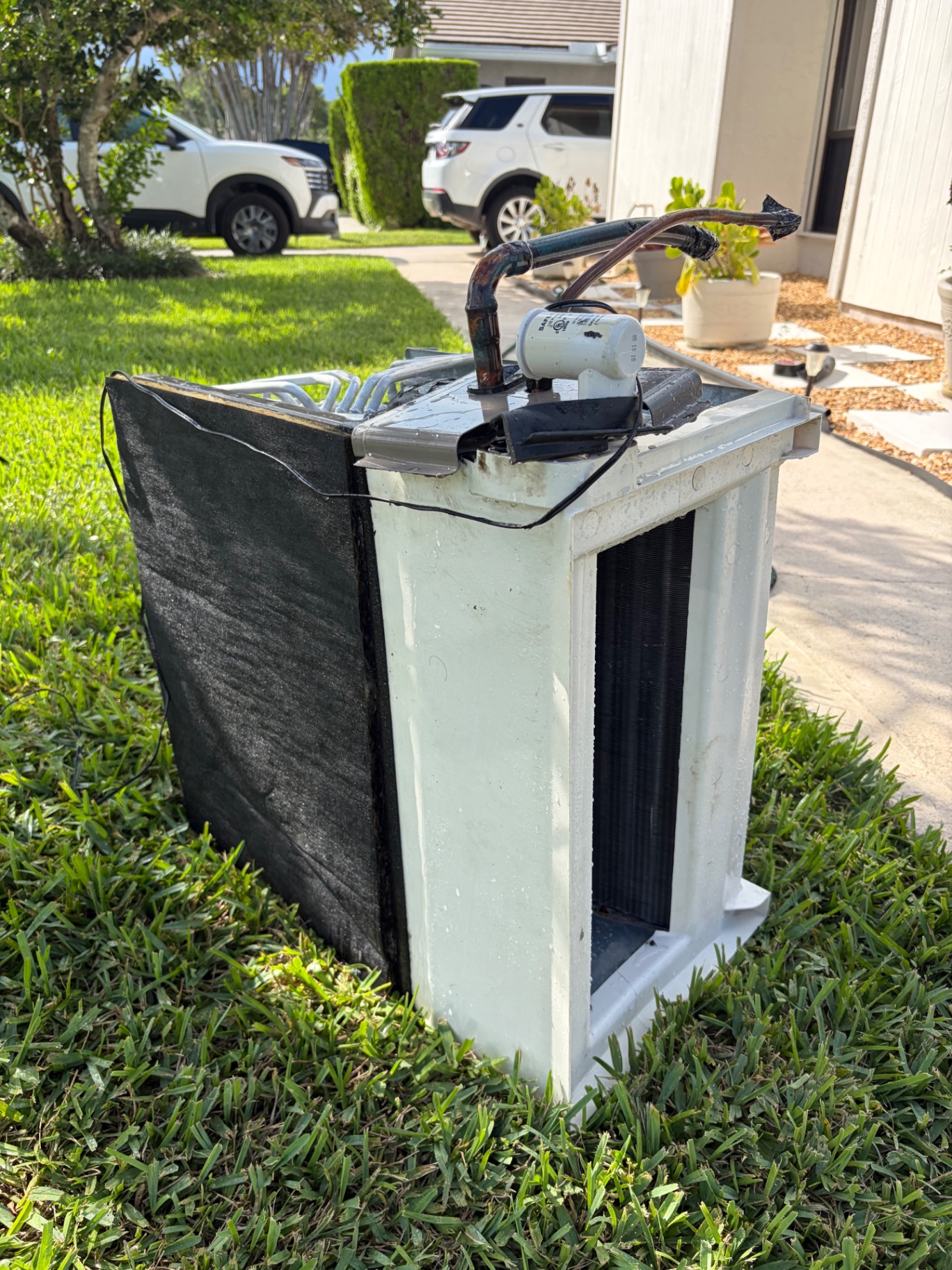
Same as an AC but with a reversing valve that swaps the refrigerant flow. In summer it pulls heat out of your house; in winter it pulls heat from outside air (yes, even cold air has heat) and pumps it inside. One system, year-round comfort.
Six common causes: reversing valve stuck in cooling mode, low refrigerant, defrost cycle stuck, failed defrost board, aux heat strips burned out, or outdoor temp too cold for the heat pump's range (rare in Florida but happens during cold snaps).
A backup mode that bypasses the heat pump entirely and runs only the electric resistance heat strips in your air handler. Use it only if the heat pump itself is broken — it costs 2–3x more to run.
Three causes: thermostat set to a temperature too far above current room temp (most heat pumps energize aux when there's more than a 2°F gap), failed outdoor temperature sensor, or the heat pump can't meet load because of low refrigerant or coil issues.
When the outdoor coil ices up during heating, the system reverses to cooling mode briefly to melt the ice. You'll see steam rising from the outdoor unit, hear the reversing valve clunk, and feel cool air at the supply vents for 5–10 minutes. Normal.
Most likely the reversing valve shifting between heat and cool — normal once or twice a cycle. Constant or violent clunking means a failing valve or low refrigerant causing erratic pressure swings.
Rarely on residential systems — maybe 1 in 50 in 15 years. When they fail, the symptom is heat pump that only cools or only heats. Replacement is brazed-in and labor-intensive.
The component failing (capacitor and contactor are cheap; defrost board, reversing valve, and compressor are expensive), refrigerant if charge is low, and whether aux heat strips also need replacement.
Call (772) 236-4277 or schedule online. Class-A licensed across the Treasure Coast.