
“My highest recommendations for Devon and the Maritime Air team — thorough, honest, and on time. They explained everything in plain language and didn't push any unnecessary upsells.”
Spencer Fuller
May 2026
Safety Disclaimer: The information on this page is provided for educational purposes only. HVAC systems contain stored electrical energy, pressurized refrigerant, and moving parts that can cause serious injury or death. Maritime Air Co. assumes no liability for any injury, property damage, system damage, or warranty loss resulting from work you perform yourself. If you are not 100% comfortable with any step described here — stop and call us at (772) 236-4277. We never charge to talk you through whether a repair is something you should tackle or leave to a licensed technician.
We're a family-owned HVAC company, and we believe an educated homeowner is a better customer — not a worse one. Here are the three repairs we trust homeowners to handle safely: clearing the condensate drain line, testing the float switch, and replacing a run capacitor. Read the safety disclaimer above before you start.
Verified Google reviews
Class-A CAC1824400
Treasure Coast residents
Full-spectrum HVAC
Approved before work begins
Warranties registered for you
St. Lucie County member
Florida humidity means your AC pulls 15–20 gallons of water out of indoor air every day in summer. That water runs through a 3/4-inch PVC tube that grows algae and biofilm. When it clogs, your float switch shuts the AC down — or worse, water overflows the pan and ruins the ceiling. This is the #1 preventable Treasure Coast service call.
The float switch is a small plastic safety device sitting in your secondary drain pan or inline on the drain. When water backs up, it tilts and breaks the low-voltage 24V circuit that tells your AC to run. If your AC is dead with no other obvious problem — test this first.
The capacitor is a small cylindrical or oval can inside your outdoor condenser that gives the fan motor and compressor the kick they need to start. When it fails, the outdoor fan won't spin, you hear humming, or the AC runs but blows warm air. Capacitors are inexpensive and fail constantly in our salt-air climate. THIS REPAIR INVOLVES STORED ELECTRICAL ENERGY THAT CAN CAUSE SERIOUS INJURY. Only proceed if you understand electrical safety. When in doubt — call us.
These DIY repairs cover roughly 60% of the no-cool calls we run in summer. The other 40% involve refrigerant, electronics, or motors that require licensed work and proper tools. Call us — never feel bad about it. We'd rather quote you a $200 capacitor replacement than fix a $2,000 secondary problem you created trying to save the first one.
Call us at any point during a DIY repair and we'll talk you through it on the phone for free. We'd rather spend 5 minutes confirming you're doing it safely than show up to a $5,000 repair that started as a $30 part. We're a family business — Devon, My, and our techs — and we'll always tell you the honest truth about whether a job belongs to you or to us. Save our number: (772) 236-4277.
“My highest recommendations for Devon and the Maritime Air team — thorough, honest, and on time. They explained everything in plain language and didn't push any unnecessary upsells.”
“Devon has provided thorough maintenance and excellent service. Truly family-owned care — they treat your home like it's their own. Highly recommend for Treasure Coast homeowners.”
“Working with Devon on my HVAC system was a great experience from start to finish. Fair, clean install, and the system has been running perfectly through Florida summer heat.”
Real installs and repairs we've completed across the Treasure Coast.
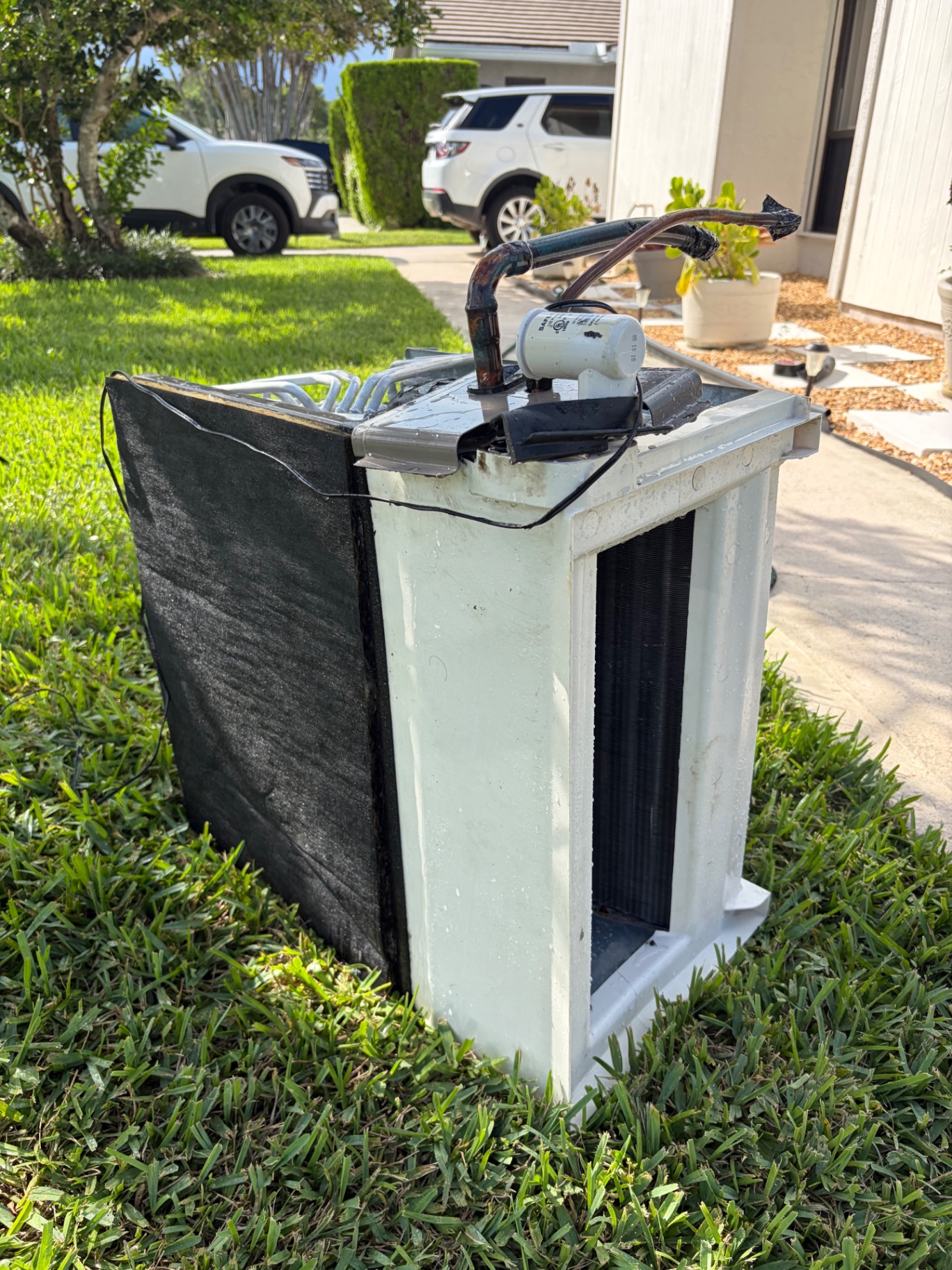
Drain line clearing and float switch testing are safe homeowner tasks. Capacitor replacement involves stored electrical energy and should only be attempted if you are comfortable working around electricity, can safely discharge the capacitor, and have shut off the disconnect at the condenser. If you have any doubt, call us — (772) 236-4277.
Wet/dry shop vac, distilled white vinegar, a multimeter, insulated screwdrivers, needle-nose pliers, and a pair of leather gloves. For capacitor work, add a 20,000-ohm resistor (or insulated screwdriver) to discharge the capacitor before touching the terminals.
Cleaning your drain line and replacing a run capacitor will not void a manufacturer's parts warranty. Major repairs — refrigerant work, compressor swaps, board replacements — must be performed by a licensed technician to keep warranty coverage.
Classic capacitor failure signs: outdoor fan won't spin but you can push-start it with a stick; humming from the condenser with no fan motion; AC runs but air is warm; bulging or leaking capacitor top. If the compressor itself won't start, the issue may be a hard-start kit, contactor, or compressor — call us.
A clogged condensate drain line. Florida humidity guarantees biological growth in the drain. A 60-second wet/vac extraction at the outdoor termination fixes 80% of summer 'AC stopped working' calls.
Refrigerant leaks (oil stains on copper lines, ice on the indoor coil, warm air), burning smells, breaker trips when the AC kicks on, water in the secondary drain pan after you've cleared the line, or any work involving the sealed refrigerant system.
Call (772) 236-4277 or schedule online. Class-A licensed across the Treasure Coast.