
“My highest recommendations for Devon and the Maritime Air team — thorough, honest, and on time. They explained everything in plain language and didn't push any unnecessary upsells.”
Spencer Fuller
May 2026
The fan on top of your outdoor unit doesn't move much air — but it rejects every BTU your AC pulled out of your house. When it stops, head pressure spikes within minutes and you're 30 minutes away from a compressor burnout. Here's how we diagnose, replace, and protect against the next failure.
Verified Google reviews
Class-A CAC1824400
Treasure Coast residents
Full-spectrum HVAC
Approved before work begins
Warranties registered for you
St. Lucie County member
The condenser fan pulls 1,800–3,500 CFM up through the outdoor coil. That airflow carries away the heat your refrigerant absorbed indoors. Stop the fan and head pressure climbs from 350 PSI to 500+ within five minutes. Modern systems trip on high-pressure cutout. Older systems without that safety burn out compressors. Either way, you cannot run the AC with a dead condenser fan.
Power off, disconnect pulled. Spin the blade by hand. Free spin with no wobble = bearings OK, suspect the capacitor. Drag or grinding = bearings failed, replace the motor. Power back on, thermostat to cool — if the compressor hums but the fan doesn't spin, gently flick the blade with a stick. If it spins up and keeps running, the capacitor is weak. If it doesn't start, the motor windings or capacitor are dead.
Salt-laden air enters the motor housing through the shaft seal and bearing vents. Salt + condensation = corrosion that eats bearing races. UV exposure degrades motor housing rubber seals within 5 years. Daytime ambient over 95°F means grease breaks down faster than the manufacturer expected. Inland systems get 12–15 years; Treasure Coast coastal systems average 6–9.
Standard residential condenser fan motors are not designed for our environment. For replacements within 5 miles of the Indian River or Atlantic, we install heavy-duty motors with sealed bearings (no grease vents), stainless steel shafts, and epoxy-coated windings. They cost more upfront and last twice as long. We've never had a callback on one.
The condenser fan capacitor lived through the same failure event that killed the motor — voltage spikes, locked rotor, overheating. Reusing it on a new motor is asking for a second failure in 6 months. Capacitor replacement adds minutes to the job, not hours.
Amp draw on the motor matches nameplate (under FLA). Rotation direction is correct (warm air should exit the top of the unit, not get pulled back in). Blade is balanced — no wobble at full RPM. Outdoor coil temperature drop is within spec. Head pressure is normal for current ambient.
Annual maintenance keeps the outdoor coil clean (a dirty coil makes the fan work harder). We add a contactor-controlled surge protector at the disconnect to absorb thunderstorm transients. For coastal homes we recommend a fan motor cover for off-season storage and a seasonal salt rinse on the outdoor cabinet.
“My highest recommendations for Devon and the Maritime Air team — thorough, honest, and on time. They explained everything in plain language and didn't push any unnecessary upsells.”
“Devon has provided thorough maintenance and excellent service. Truly family-owned care — they treat your home like it's their own. Highly recommend for Treasure Coast homeowners.”
“Working with Devon on my HVAC system was a great experience from start to finish. Fair, clean install, and the system has been running perfectly through Florida summer heat.”
Real installs and repairs we've completed across the Treasure Coast.
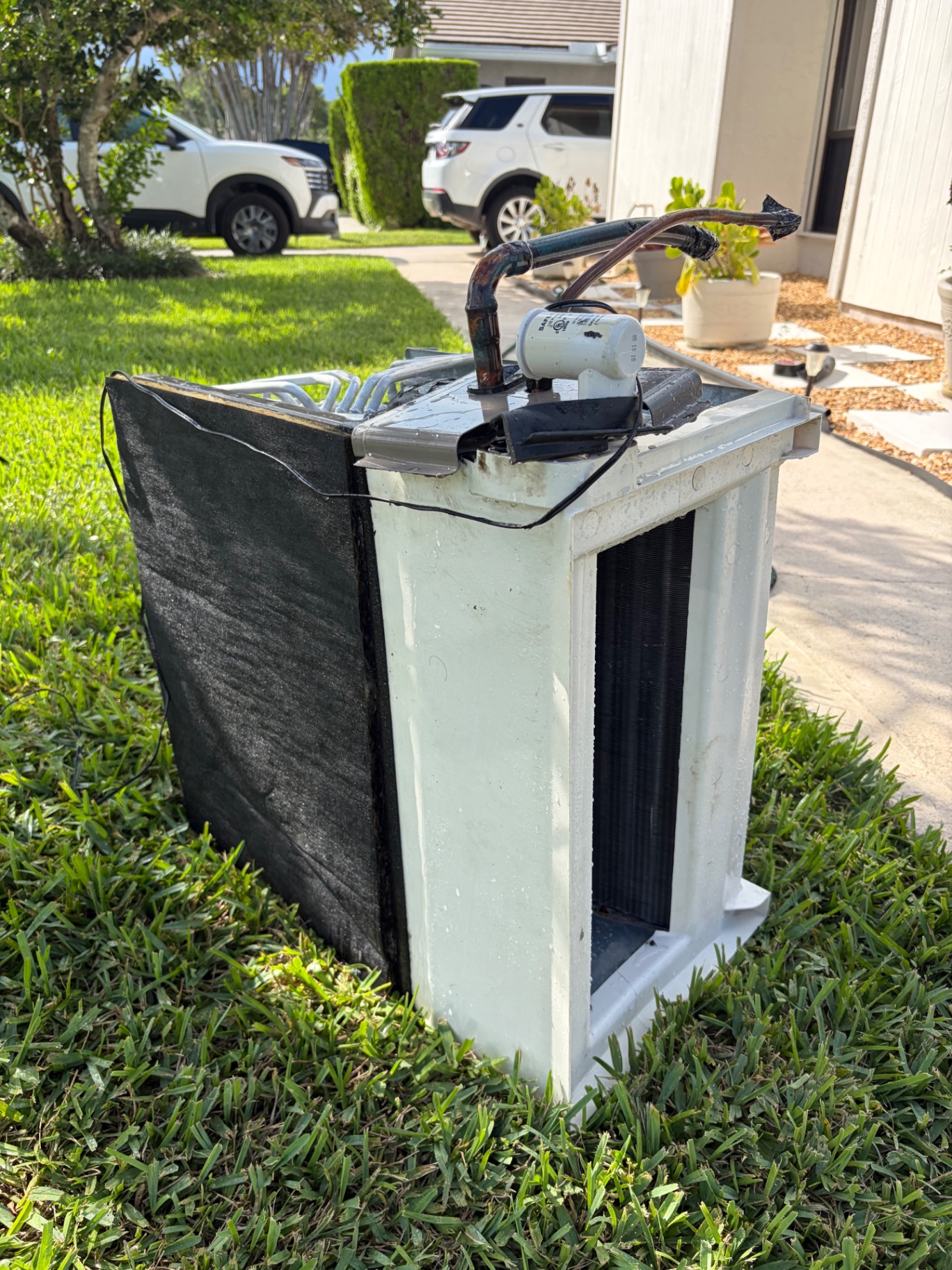
Major-component replacements are only as good as the labor, refrigerant work, and 10-year system health behind them. Compass Protection 10™ covers parts, major-component labor, and a decade of Precision Maintenance so a repair like this never has to happen twice.
It pulls air across the outdoor coil to reject the heat your AC removed from your house. Without it, refrigerant pressure spikes within minutes and the compressor trips on high-pressure cutout — or burns up if there's no cutout.
Outdoor fan not spinning while compressor is running, humming with no rotation, wobbling blade, loud bearing noise, hot outdoor unit cabinet, AC blowing warm air after a few minutes of cooling, or breaker trips.
If a gentle nudge gets it running, the capacitor is the actual failure — not the motor. We see this constantly. Don't run the system long this way; you'll damage the motor windings.
Salt air corrodes bearings and shafts. UV degrades the motor housing seal. Heat shortens grease life. Coastal Treasure Coast installs typically see 6–9 year motor life vs. 12–15 inland.
60–90 minutes including new capacitor (we always replace together), blade balancing, and amp draw verification.
We use OEM when warranty applies. For replacement units we use heavy-duty marine-grade motors (sealed bearings, stainless shaft) — they cost more but double the life on Treasure Coast installs.
Horsepower, rotation direction, shaft size, mounting style, OEM vs aftermarket, capacitor replacement, and whether the fan blade is damaged and needs replacement too.
If a capacitor test shows it's failed and the motor spins freely by hand, capacitor only is fine. If the motor bearings are dragging or windings test weak, replace both — the motor will take out the new capacitor within months.
Call (772) 236-4277 or schedule online. Class-A licensed across the Treasure Coast.