
“My highest recommendations for Devon and the Maritime Air team — thorough, honest, and on time. They explained everything in plain language and didn't push any unnecessary upsells.”
Spencer Fuller
May 2026
Condensate pumps are the unsung workhorse keeping your closet or basement AC from flooding. When they fail, you usually find out via a soaked carpet or a tripped safety switch. Here's the diagnostic order we follow and how to know when to clean vs. replace.
Verified Google reviews
Class-A CAC1824400
Treasure Coast residents
Full-spectrum HVAC
Approved before work begins
Warranties registered for you
St. Lucie County member
Most Treasure Coast homes drain by gravity — no pump needed. But you'll find pumps on: ductless mini-splits where the indoor head is below the exterior drain point, attic air handlers with a long horizontal run that won't slope correctly, basement furnaces with AC coils, and high-velocity systems with sub-floor air handlers. If you have one, it's working 14+ hours a day all summer.
Don't replace until you've ruled out the simple stuff.
Power off, unplug, disconnect the discharge tubing. Lift the pump out. Remove the four screws holding the tank to the motor housing. Pull the impeller (it slides off the shaft). You'll usually find black biofilm wrapped around it. Scrub with vinegar and a toothbrush, flush the tank with vinegar solution, check the rubber check-valve diaphragm for tears. Reassemble. Test.
Motor housing cracked, shaft bearings noisy, tank discolored or warped, or pump older than 6 years — replace. Quality replacement pumps (Little Giant VCMA-20ULS, Aspen Mini Aqua for mini-splits) cost less than the labor to keep nursing an old one along.
Every condensate pump install must include a safety switch that shuts off the AC if water exceeds pump capacity. It's two wires in series with the thermostat's R-Y control circuit. Without it, a stuck float means water on your floor instead of a temporarily uncomfortable house. We've seen $20,000 in flooring damage from missing $15 safety switches.
Pump discharge must rise continuously to its destination — no low spots where water sits and grows algae. Use 3/8-inch vinyl tubing, secure with cable ties every 4 feet, and terminate over a floor drain, condensate pan, or exterior point. Never tie into a sanitary drain without a code-compliant air gap.
Once a quarter: pour a cup of distilled vinegar into the pump reservoir, let it sit 30 minutes, then trigger the pump to flush. This keeps biofilm from establishing. Mini-split pumps especially benefit — their tiny reservoirs clog fast.
“My highest recommendations for Devon and the Maritime Air team — thorough, honest, and on time. They explained everything in plain language and didn't push any unnecessary upsells.”
“Devon has provided thorough maintenance and excellent service. Truly family-owned care — they treat your home like it's their own. Highly recommend for Treasure Coast homeowners.”
“Working with Devon on my HVAC system was a great experience from start to finish. Fair, clean install, and the system has been running perfectly through Florida summer heat.”
Real installs and repairs we've completed across the Treasure Coast.
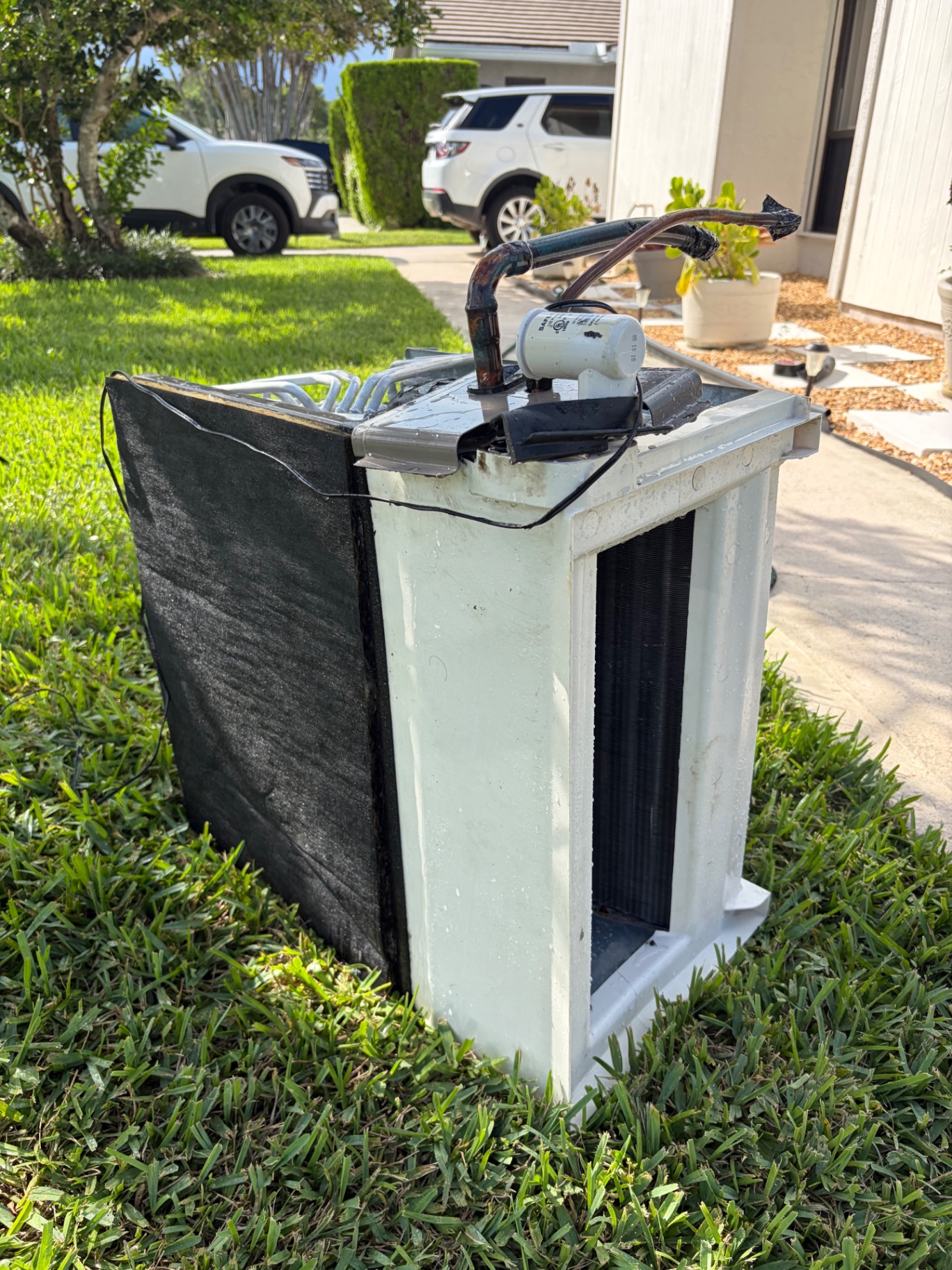
A small electric pump that lifts AC condensate water uphill to a drain when gravity drainage isn't possible — common in basements, closet air handlers below grade, and mini-split installations.
Pump reservoir overflowing, no humming when the float rises, continuous humming with no water moving, AC shutting off because of overflow safety, or visible water around the pump base.
5–7 years on average. Hard water minerals, biological growth, and constant cycling wear out the diaphragm and impeller bearings.
Yes — if the pump motor runs but doesn't move water, often the impeller is clogged with biofilm. Disassemble, flush with vinegar, scrub the check valve and impeller. Buys you another year.
An overflow switch wired into the AC's 24V control circuit. When water exceeds the pump's capacity, the switch shuts off the AC to prevent flooding. If your AC randomly stops, check this first.
Float switch is stuck, the check valve is leaking back, or the discharge line has a low spot collecting water. We diagnose all three on the same visit.
Yes — they're plug-and-play units with simple PVC connections. But always include the safety switch wiring to the air handler's R-Y circuit, and slope the discharge line continuously upward.
Pump capacity (GPH), tank size, brand quality (Little Giant vs. generic), whether discharge tubing needs replacement, access difficulty, and whether the float safety needs to be added/rewired.
Call (772) 236-4277 or schedule online. Class-A licensed across the Treasure Coast.