
“My highest recommendations for Devon and the Maritime Air team — thorough, honest, and on time. They explained everything in plain language and didn't push any unnecessary upsells.”
Spencer Fuller
May 2026
The compressor is the heart of your AC — and the most expensive single component. About 60% of the compressor replacements we're called out to evaluate are misdiagnoses. Here's how we test a compressor properly, when warranty applies, and what a textbook changeout actually looks like.
Verified Google reviews
Class-A CAC1824400
Treasure Coast residents
Full-spectrum HVAC
Approved before work begins
Warranties registered for you
St. Lucie County member
A non-starting outdoor unit gets blamed on the compressor more than any other component, but it's usually the capacitor, contactor, or thermostat circuit. Before condemning a compressor we verify: line voltage at the compressor terminals, capacitor microfarads in spec, locked-rotor amps within 3x FLA, and winding resistance with a megger to ground. Only when all four point at the compressor do we open a warranty claim.
Major manufacturers — Trane, Carrier, Rheem, Lennox, Goodman, American Standard — extend the standard 5-year parts warranty to 10 years if the installer registered the serial number within 60 days of install. We look up your unit's registration status before quoting. About one in three Treasure Coast homeowners has 10-year coverage they don't know about.
A compressor doesn't fail without a reason. Before installing the replacement, we identify why the original died — otherwise the new one fails for the same reason.
Recover refrigerant to EPA spec. Open the system, cut out the old compressor with a tubing cutter (never a torch — burning oil contaminates the system). Braze in the new compressor under nitrogen flow. Install new liquid-line and suction-line filter-driers. Pressure-test to 350 PSI with dry nitrogen for 30 minutes. Pull a vacuum to 500 microns minimum, isolate, watch for decay. Weigh in the factory charge by the nameplate, then fine-tune superheat and subcooling to OEM spec. Document everything for warranty.
If the compressor windings burned, the refrigerant oil is acidic. That acid coats every internal surface in the system. A bolt-in replacement without flushing means the new compressor's first hour of operation soaks fresh oil with old acid, and the windings start failing again within weeks. Proper burnout cleanup uses suction-line filter-drier, oil acid-test at 24 hours, and a second drier change at 30 days.
We give you the honest math. Under 8 years old, healthy coils, warranty-covered compressor — repair. Over 12 years, R-22 refrigerant being phased out, corroded coastal coil, failing blower motor — replacement pays back in 4–6 years on efficiency alone. Right in the middle, we lay out both numbers so you decide.
We use OEM-matched scroll compressors when warranty applies. For out-of-warranty replacements we offer Copeland or Bristol genuine compressors — never aftermarket no-name units. Scroll compressors run quieter, handle slugging better, and last longer than the reciprocating compressors most pre-2010 systems shipped with.
“My highest recommendations for Devon and the Maritime Air team — thorough, honest, and on time. They explained everything in plain language and didn't push any unnecessary upsells.”
“Devon has provided thorough maintenance and excellent service. Truly family-owned care — they treat your home like it's their own. Highly recommend for Treasure Coast homeowners.”
“Working with Devon on my HVAC system was a great experience from start to finish. Fair, clean install, and the system has been running perfectly through Florida summer heat.”
Real installs and repairs we've completed across the Treasure Coast.
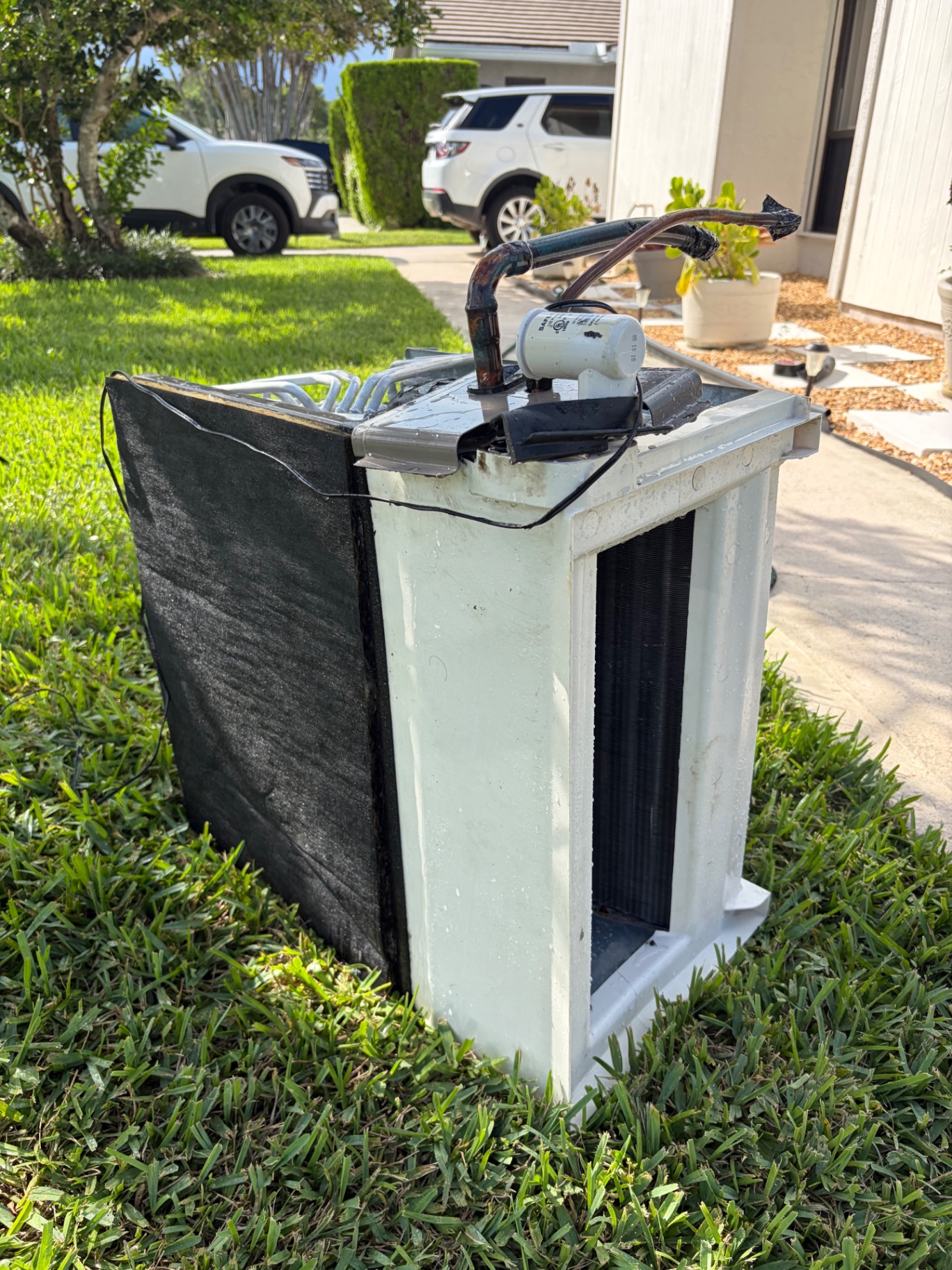
Major-component replacements are only as good as the labor, refrigerant work, and 10-year system health behind them. Compass Protection 10™ covers parts, major-component labor, and a decade of Precision Maintenance so a repair like this never has to happen twice.
Loud knocking on startup, hot outdoor unit that hums but never starts cooling, breaker trips immediately on a cooling call, oil sprayed inside the cabinet, or a megger test showing windings shorted to ground.
Most major brands (Trane, Carrier, Rheem, Lennox, Goodman) offer a 10-year parts warranty if registered within 60 days of installation. We look up your serial number and process the claim — homeowners typically pay labor and refrigerant only.
Honest math: if the system is under 8 years old and the rest of the components test healthy, replace the compressor. Over 12 years or with corroded coil, failing fan motor, and obsolete refrigerant (R-22) — the system replacement pays back faster in efficiency.
A full changeout is 5–8 hours done correctly: recover refrigerant, cut out the old compressor, braze in the new one, pressure-test with nitrogen, evacuate to 500 microns, weigh in factory charge, and verify subcooling/superheat. Anyone quoting 2 hours is skipping steps.
Compressors don't fail randomly. We see four root causes: chronic low refrigerant burning the windings, weak capacitor causing high startup amps, slugging from a flooded suction line, or contamination from a previous burnout that wasn't cleaned properly.
A burnout is when compressor windings short and burn the refrigerant oil — turning it acidic. That acid travels through the whole system. A proper burnout cleanup requires filter-driers (suction and liquid line), system flush, and oil analysis at 30 days. Skip these steps and the new compressor dies in months.
Tonnage of the system, refrigerant type (R-410A vs R-22 vs R-454B), whether the compressor is warranty-covered, scroll vs reciprocating design, single-stage vs two-stage vs variable-speed, and whether burnout cleanup is required.
Only if the rest of the system is healthy. We test the indoor coil, evaporator metering device, line set integrity, and electrical components before replacing — putting a new compressor on a sick system kills the new compressor.
Call (772) 236-4277 or schedule online. Class-A licensed across the Treasure Coast.